Compliance and Security
Employment Law in Bolivia: a Guide
Published dateOctober 1, 2021
Last updateOctober 27, 2023
Reading time5 minutes

If you are looking to register a business in Bolivia, or already have commercial interests there, you will need to be able to effectively navigate Bolivian employment law in order to establish and maintain your reputation in the local market.
If you are looking to register a business in Bolivia, or already have commercial interests there, you will need to be able to effectively navigate Bolivian employment law in order to establish and maintain your reputation in the local market.

Employment law in Bolivia is overseen by the Ministry of Labor, Employment and Social Welfare, and while it is similar to other legal codes found elsewhere in the region, it also includes its own particularities.
As such, you will want to secure the services of a reliable corporate attorney in Bolivia with a history of assisting foreign investors entering and doing business in the market.
If you are planning a short-term or limited-scale operation in the country, or simply need to hire a small number of executives to oversee your business, you may find that hiring through a professional employer organization (PEO) in Bolivia is your best option.
Because when you hire through a PEO, the PEO firm contracts those staff on your behalf, meaning that you have full control over their workload and duties, but avoid the need to establish and later liquidate an entity in the country. In many cases this represents a more rapid and cost-effective solution, while also guaranteeing your compliance with local regulations.
The following guide to employment law in Bolivia offers an overview of the regulatory regime, including standard working hours, the most common types of employment contracts, leave allowances, and tax contributions related to employees that you will oversee as their employer.
If you would like to know more about how we can assist you in understanding and implementing employment law in Bolivia, contact us today.
Working hours according to Bolivian employment law
Under employment law in Bolivia, a normal working day is eight hours long. A standard working week is no less than five and no more than six days long, making the maximum working week a total of 48 hours long.
While additional hours are permitted, they must be remunerated accordingly, based on the hourly rate earned during normal hours.
Note that there are generally between nine and 11 national holidays that fall on weekdays per calendar year in Bolivia.
Employment law in Bolivia: common contract types

There are two main contract types allowed under employment law in Bolivia that are used by foreign companies and investors.
- Indefinite contracts are the most common type of contract used in Bolivia and can only be terminated when both parties agree, or when one has the right to act unilaterally based on the terms of the contract. For example, if an employee resigns from their position, or in the event that they are guilty of serious misconduct that allows them to be removed.
Under employment law in Bolivia, indefinite contracts include a trial period of 90 days, during which termination can occur without such stipulations.
- Fixed-term contracts can only be used in specific situations, such as to fill a temporary absence (for example, maternity or long-term sick leave cover), or when the employee is engaged in work unrelated to the core activities of the company. Such contracts can also be used in extenuating circumstances, such as contracting medical staff during an emergency. A fixed-term contract can only last for one year under Bolivian employment law.
Vacations, leave, and other absences
Under employment law in Bolivia, after completing one year of service with the same employer, employees are entitled to 15 days of paid vacation per calendar year. It is the employer’s responsibility to make sure that an employee uses their full allowance.

Sick leave Employees are entitled to be paid for days missed through sickness. However, they must present an authorization letter signed by a registered doctor within three days of their return to work in order to receive payment. In the event of a longer-term absence, the authorization must be presented prior to that return.
Maternity and paternity leave Under Bolivian employment law, maternity leave allowance totals 90 days, made up of 45 days before the day the baby is due to be born and 45 days after that date. Fathers are entitled to three days of paid paternity leave. New parents cannot be removed from their jobs until at least one year after the birth of a child.
Bereavement For public employees, three days of paid bereavement leave must be granted to an employee in the event of the death of a parent, child, sibling, or spouse. Public employees are not legally entitled to any paid bereavement leave, however the three day allowance is generally observed.
Statutory contributions under Bolivian employment law
Employee Deductions: Deductions from the salaries of employees total 12.71%, and are made up of a 10% deduction for social security, a 1.71% deduction for occupational risk, a 0.5% deduction for pension contributions, and a 0.5% deduction for insurance.
Under employment law in Bolivia, anyone earning more than four times the minimum salary will have value-added tax deducted from the remainder of their salary after the 12.71% deduction.
As of 2021, the minimum salary in Bolivia is 1,805 bolivianos per month (approximately US $262), meaning that VAT is applied to any salary in excess of 7,220 bolivianos per month (approximately US $1,048).
Employer contributions Employers must make contributions totalling 16.71% of an employee’s salary, made up of a 10% contribution towards social security, a 1.71% contribution towards occupational risk, a 2% contribution towards the pension fund, and other contributions totalling an additional 3%.
Profit sharing Companies resident in Bolivia must share 25% of their net annual profits with any employees who have worked for the company for at least three months, with profit shares earned by employees based on their salary level.
Biz Latin Hub can assist you doing business in Bolivia
At Biz Latin Hub, our multilingual team of corporate support specialists has the experience and know-how to help you navigate employment law in Bolivia.
We offer a comprehensive portfolio of back-office solutions, including company formation, visa processing, accounting & taxation, legal services, and hiring & PEO, meaning that we can provide a tailored package of back-office services to suit every need.
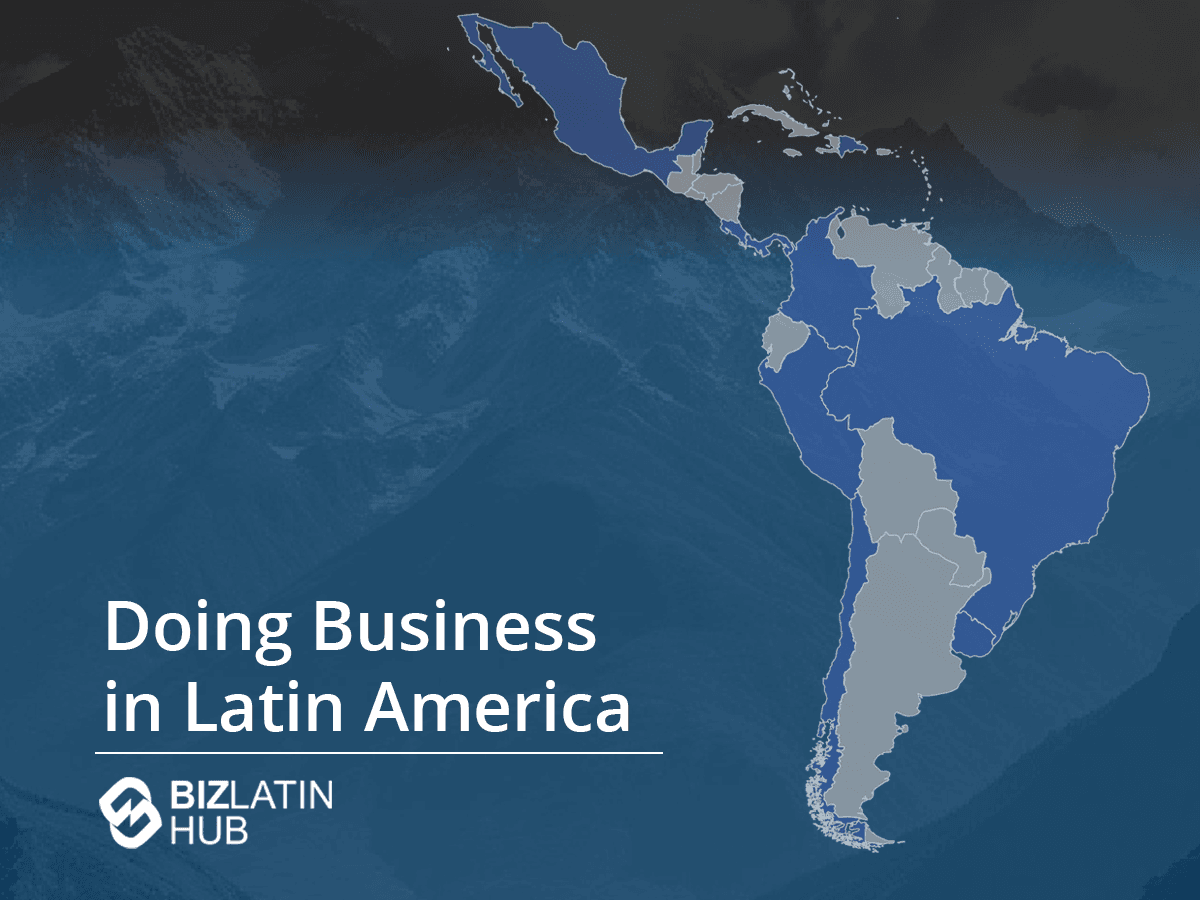
We have teams in place in 15 other markets around Latin America and the Caribbean, meaning that we can help you effectively plan your operations and taxes across multiple markets, while we also specialise in multi-jurisdiction market entries.
Contact us now to discuss how we can support your business.
Or learn more about our team and expert authors.

5d9e65c8-bolivia-employment-snapshot-2023
Download
Share this guide
More guides for Bolivia

Company FormationUnderstanding Bolivian Business Etiquette: Culture, Trust, and Communication
BankingOverview of Banking Innovation in Bolivia
Employment2025 Hiring Trends in Bolivia – Recruitment, EOR & Entity Setup Services
Company FormationHow to get the most from a headhunter and IT recruitment in Bolivia?
Let’s talk about your expansion
Tell us which markets you’re entering and what you need handled. A local specialist will map out your options — no obligation.
Trusted by teams expanding across Latin America and the Caribbean
