Vistra + Biz Latin HubVistra + Biz Latin Hub
News
Guides
Jobs
  • English
Contact us
Contact us
  • English
    • Company Formation
    • Legal Services
    • Payroll
    • Accounting
    • Company Formation
    • Legal Services
    • Accounting & Taxation
    • PEO & Recruitment
    • Bank Account Opening
    • Tax Advisory
    • Visa Processing
    • Our Team
    • Our Partners
    • Our Awards & Recognition
  • News
  • Guides
  • Jobs
Company FormationLegal ServicesPayrollAccounting
Company FormationLegal ServicesAccounting & TaxationPEO & RecruitmentBank Account OpeningTax AdvisoryVisa Processing
Our TeamOur PartnersOur Awards & Recognition
Vistra + Biz Latin Hub

Got a question? Get in touch

Make an enquiry

About

  • Our Team
  • Our Partners
  • Our Awards & Recognition

Solutions

  • Company Formation
  • Legal Services
  • Payroll
  • Accounting

Our Services

  • Company Formation
  • Legal Services
  • Accounting & Taxation
  • PEO & Recruitment
  • Bank Account Opening
  • Tax Advisory
  • Visa Processing

Resources

  • Insights
  • Locations
  • Subscribe to our newsletter
©2026 Biz Latin Hub
Legal NoticePrivacy policyModern slavery statement
©2026 Biz Latin Hub
Company Formation

Business Opportunities in Brazil – Textile Market and Fibre Industry

Published dateAugust 17, 2018
Last updateJanuary 18, 2023
Reading time3 minutes
Business Opportunities in Brazil – Textile Market and Fibre Industry

Brazil is globally recognised for its large exports of soy, corn and cotton. However, a lesser known industry that is slowly emerging as a strong investment opportunity is the textile sector.

On this page

  • Business Opportunties – Introduction to the Brazilian Textile Industry
  • Problems Associated with the Industry
  • Commercial Opportunities

Brazil is globally recognised for its large exports of soy, corn and cotton. However, a lesser known industry that is slowly emerging as a strong investment opportunity is the textile sector. Brazil is geographically huge and diverse, allow the region to produce an impressive variety of natural yarns, fabrics and materials as well as having an emerging retail and fashion market.

Business Opportunties – Introduction to the Brazilian Textile Industry

As well as using cotton, Brazil has begun integrating synthetic fibres and yarns into its production process. However, the expansion in producing these new raw materials, however, is stemmed by obstacles that affect the internal suppliers of these products.

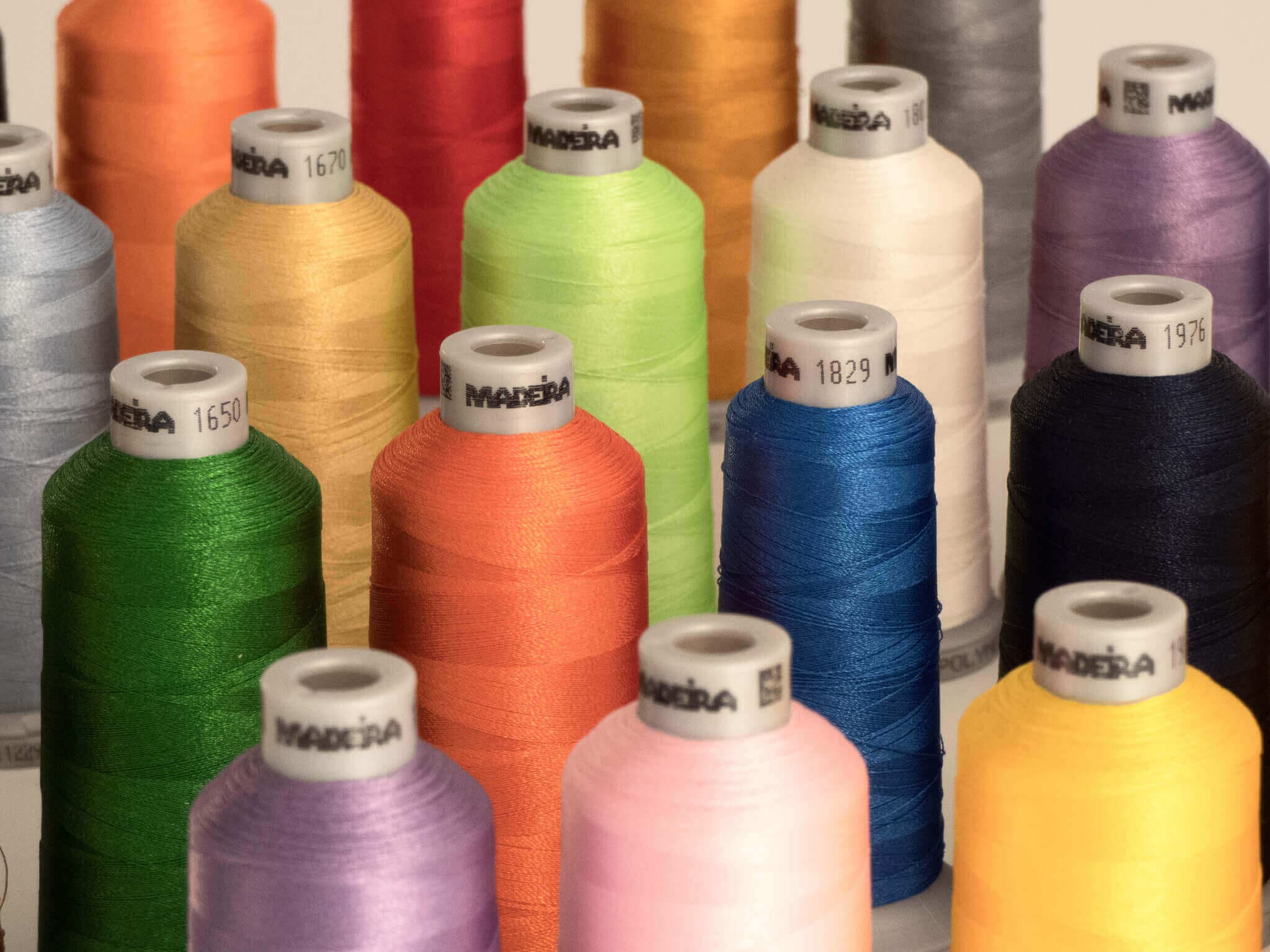
A close-up view of multiple rolls of colorful textile fabric, neatly stacked in rows. The fabrics include shades of blue, pink, yellow, green, and purple. They have a woven texture, and the rolls are tightly packed, creating a vibrant, orderly display.

Talking with some industries that are buyers of this kind of fiber and Synthetic Yarns, one can see that the standard and most usual Polyester Product used in Brazil is a Polyester Yarn, described as “FDY 150D/48F LINEN DTEX NIM YARN”, not died, non-textured, untwisted (0% of Twist), followed by raw polyester fibers and polyester yarns with elastane.

The Brazilian Association of Producers of Artificial and Synthetic Fibers (ABRAFAS) highlighted that Brazilian producers can only supply 40% of all synthetic fibre consumed by Brazilian textile industries, meaning that Brazil is importing around of 60% of the synthetic fibres and yarns that are consumed by its textile companies.

Through information obtained by the Biz Latin Hub after making contact with some clients that purchase these synthetic fibres, the most commonly used yarn is a non-died, non-textured and untwisted fibre known as “FDY 150D/48F LINEN DTEX NIM YARN”. The other most important fibres are made of raw polyester and polyester mixed with elastane. ABRAFAS explains that Brazilian producers only are able to supply 40% of syntamerhetic fibre that is consumed by Brazilian textile industries. Logically, this means that a remarkable 60% of resources (valued at roughly US$2.5 billion per year) required by the industry is imported, suggesting operations to reduce the bureaucracy, modernise production and improve distribution services that hinder this market could be hugely profitable. Many foreign companies have already identified this opportunity and are working alongside local groups who can help support their commercial plans in the region.


More guides for Brazil

VAT changes in Brazil: What you need to knowUBO in Brazil: how to stay compliantBrazil’s Economy Shines Brighter than PerceivedAuditor in Brazil: Why do you need an auditor for your company?Nearshoring in Brazil: What are the benefits?Find a headhunter in Brazil for executive or IT recruitment

More guides for Brazil

VAT changes in Brazil: What you need to know
Tax & AccountingVAT changes in Brazil: What you need to know
UBO in Brazil: how to stay compliant
Compliance and SecurityUBO in Brazil: how to stay compliant

Let’s talk about your expansion

Tell us which markets you’re entering and what you need handled. A local specialist will map out your options — no obligation.

Get in touchTalk to an expert

Trusted by teams expanding across Latin America and the Caribbean

Talk to a Latin America market-entry specialist

Problems Associated with the Industry

There is currently just one Brazilian company in São Paulo, in the city called ‘Americana’, and it consumes more than 300,000 kg of polyester yarn per month. It imports half of this polyester yarn from Indonesia and AA international Companies (with their headquarters based in Kuala Lumpur) and buys the other 50% from Brazilian companies. One of the owners of this company explained that although the prices can be more economical, the importation process can be very stressful and time-consuming, normally requiring the assistance of a local legal team.

Foreign companies often encounter problems in finding good local suppliers, exchanging contracts and warranties, acquiring special licenses and adhering to the local importation requirements. For this reason, they often choose to work with a local partner to mitigate the complexity.

Commercial Opportunities

As we can see, Brazil is a great and unexplored market, with a strategic, logistic and established regulatory system that allows collaboration with other Latin American countries. Additionally, private companies are able to enjoy all the opportunities that Mercosur brings to foreign companies that operate in the region.

Through the incorporation of a local company in Brazil, one can legally engage in domestic production, or simply import these products and then resell them. If you ensure your Brazilian company has high-quality products and a competitive price, even with your industry and production settled abroad, then is clear that there are ample investment opportunities in the Brazilian polyester market.

If you want to know more about how to navigate the potentially complicated Brazilian textile industry, or if you simply want to understand the Brazilian business environment, contact us today and our services.

Share this guide

Claudir Ambra Lizot, Brazil country manager at Biz Latin Hub, discusses opening a business in Brazil
Trends for Foreign Direct Investment in Brazil

On this page

  • Business Opportunties – Introduction to the Brazilian Textile Industry
  • Problems Associated with the Industry
  • Commercial Opportunities
Brazil’s Economy Shines Brighter than Perceived
Company FormationBrazil’s Economy Shines Brighter than Perceived
Auditor in Brazil: Why do you need an auditor for your company?
Tax & AccountingAuditor in Brazil: Why do you need an auditor for your company?