Company Formation
From Coffee Plant to Cup: The Colombian Coffee Production Process
Published dateJuly 10, 2017
Last updateJuly 22, 2024
Reading time12 minutes
This is the second article about Coffee Production which is part of a series covering all the different aspects ranging from Colombia’s Macroeconomic dynamics to recommendations on how to invest and potential marketing strategies.
This is the second article about Coffee Production which is part of a series covering all the different aspects ranging from Colombia’s Macroeconomic dynamics to recommendations on how to invest and potential marketing strategies.
In the last article about “Why Branding Your Production as Specialty Colombian Coffee is Profitable“, I stated the importance of marketing your coffee as specialty and trying to sell it to the rich. However, if you are thriving to achieve the best quality possible your coffee production has to be flawless. The information below shows the various components and techniques which are used in coffee production.
Coffee Production: Timeline from Coffee Plant to Cup
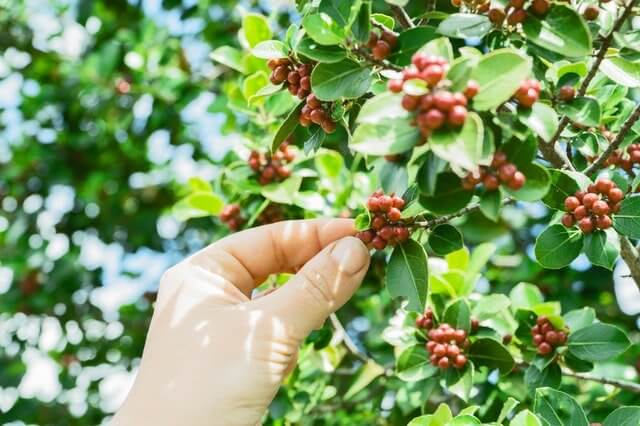
Colombian Coffee plants grow on steep slopes, usually dispersed with banana plants providing shade and sponging water. Coffee plants flower and then turns into coffee cherries. These will start off as green, then ripen when they turn red. Coffee cherries are picked twice a year, usually, during the rainy season, the picking can take place daily or up to every 8 days and will be one of the defining factors or quality. The closest to optimum ripeness they are, the better the end cup will taste.Due to the hilly setting of most coffee production, Colombia picks its coffee by hand. Many small-scale family-run farms will pick the cherries daily during the picking season.

Once the Cherry is picked, the pulp and inner husks are all removed to leave the coffee bean, which is the “pit”(seed) of the coffee cherry. Depending on the method, the beans are soaked, which also helps separate the different grades of beans. This is done to remove the “floaters” which are beans that have air in them. Usually, because they are overripe or have been nibbled at by Hypothenemus Hampei, one of the only insects resistant to caffeine.
The green (unroasted) beans are shipped to roasters, usually overseas. This is in order to keep the product as fresh as possible. The green coffee beans are seeds and can be conserved for a long time without affecting the quality of the end product yet as soon as they are roasted, usually, at around 400°c they change from seed to ailment. The roasting preferences also vary greatly from place to place. France, Italy, and Germany for example like dark roasts, these give the coffee a more acidic taste and lower caffeine levels. The Japanese or Colombians, on the other hand, tend to prefer a lighter roast. For these reasons, producers tend to roast the coffee in the country of consumption.
When the green beans are roasted they turn to the dark brown color we associate with coffee. Lighter roasts keep the original tastes of different beans while darker roasts have a fuller, bitterer flavour. It is interesting to note that the longer you roast the beans, the less caffeine will be retained, so dark roasts such as French or Italian roasts, actually have less caffeine.
The roasted beans are then ground and brewed (either soaked in the French press, brewed in a coffee maker or hot water is pushed through the grounds at high pressures to make espresso) and the coffee is ready for consumption.
Initiatives to Achieve Better Coffee Quality
Overall the coffee tree which is planted at lower altitudes will have a greater yield than those planted at higher altitudes. These high yields can, however, affect the quality of the final product. Just like any plant, the transfer of nutrients from the soil to the fruit which is in great part responsible for the quality and character of the end product. The concept of “terroir” has been very popular in the winemaking industry and can be applied to many other agricultural sectors such as the coffee industry. In France, for example, it is illegal to water your vines. This means that the roots dig deep to find water and end up reaching out to many more nutrients. As said above the yield of coffee is greater at lower altitudes (due to sun, temperature, etc). Ceteris Parabus, this essentially means that the concentration of each cherry at lower altitudes is lower, due to the nutrients pulled from the soil being spread into more fruit. This affects the intensity of the taste of the end product. Therefore planting coffee at higher altitudes will limit the yield and increase the concentration of the end product.
Arabica is very sensitive to the sun. Scientists seem to agree that the best way to preserve Arabica coffee is through the use of shade trees (Jaramillo et al., 2009; Jaramillo et al., 2011; Ramirez-Villegas et al., 2012). Shade trees planted near coffee plants have the ability to block out the sun’s impact on the plants and to create lower temperatures better suited for Arabica coffee plants. They also go on to say shade trees can cause a reduction in temperature by up to 4 degrees Celsius. With the widespread implementation of shade trees in Colombia and Ethiopia, the increase in the population of H. hampei (coffee-eating insect) could be 34 percent lower than expected (Jaramillo et al., 2011). These relatively small steps could provide protection and stability to the struggling Arabica coffee plants (when planted at lower altitudes). Recently large organisations and co-ops have been promoting the usage of OMG’s which are more sun resistant and do not need tree protection. Although this means more space to grow coffee (replacing the space taken up by trees) it also means more vulnerability to drought as well as greater risk of disease and attacks (H. hampei). Typically Colombian coffee production will have a range or Banana and Plantain trees. This is because they act like sponges, retaining water in their trunks and releasing it when the soil gets too dry. It is also important to know that Banana’s rarely fall to the ground, thus not interfering with the soil.
What is the coffee production process like?
The coffee production process involved these steps:
- Sorting.
- Floaters.
- Removing Outer Skin.
- Wet Process & Pulping.
- Parchment Coffee.
- Processed Coffe.
- Sorting: Processed coffees are sometimes hand sorted to remove defects or to separate the cherries by grade (quality).
- Floaters: Coffee cherries that float in water and are ‘floated-off’ during wet-processing. Overripe, dried, damaged or deformed coffee cherries tend to float and are discarded at the beginning of wet processing. Some people also refer to them as “lights”.
- Removing Outer Skin: There are three different processes for removing the outer skin, each of the following will influence the end taste of the coffee produced. The first is the wet process which consists in creating a mixture of water and sugar and adding the beans, enzymes will then eat up the remaining fruit and the hull will be easily removed when dry. The second is carrying out fermentation without adding water and sugar. This means that the beans will sit and ferment in their own juice. Finally the last is the dry process, which as the name gives away consists in drying the cherry. This then means that the pulp and hull can be easily removed. The Dry Method is the oldest of processing methods, the coffee fruit is simply picked and put out into the sun to dry, fruit and all. It is spread in a thin layer and raked regularly to maintain even temperatures from top to bottom of the layer. Drying takes anywhere from ten days to three weeks. The thick outermost membrane of the coffee cherry (fruit) is similar to the skin of a grape. In the wet and semi-dry processes, the skin of the ripe coffee cherries is removed before drying the coffee beans. In the dry process, the skin is left in place while the whole ripe coffee cherries are let to dry, either by sun or machine, which allows an easier separation of the skin, pulp and hull from the coffee beans. The effect on the taste of the end product varies yet it is clear that the end taste of the coffee is affected.
- Wet Process & Pulping: In the wet process, ripe cherries are first immersed in water where any floating cherries (floaters) are removed as defective. The remaining cherries are then pressed by a machine against a perforated surface, allowing only the seed, and some attached pulp, to pass through the holes. The remaining pulp is then removed by placing the beans into a fermentation tank to loosen the pulp before washing the pulp away with water. After the pulp is removed, the coffee beans are then dried to about ten to twelve percent moisture content, usually by a combination of sun drying and machine drying. Machine drying is common practice, especially in damp climates, to prevent mildew. Especially in Colombia where drying beans in the sun can be tricky due to rainfall. When dried outside they tend to tan for 10 to 15 weeks. Wet processed coffee is sometimes called washed coffee, in reference to the washing done to separate the pulp from the beans. Some also call it the wet method.
- Parchment Coffee: Coffee beans with their skin and pulp removed, but with the parchment (hull) still attached. Dried parchments are transferred to hulling facilities where the hulls are removed and the beans are packaged in large burlap bags ready for export. Although this has now become common practice, many roasters don’t like coffee getting hulled. This is due to the machine (huller) removing the hull through heat-generating friction. Thus many roasters claim that not only is this an unnecessary step but it can also affect the resulting cup taste.
- Processed Coffee: Unroasted coffee beans that have been sorted, pulped, dried, and separated from the hull are processed. They are ready to be sent to their final destination to be roasted.

Modifying the Taste and Quality of Coffee
- Aged Coffee: Coffee stored in a warehouse for up to several years to reduce acidity and increase the body. When stored properly, aged coffees have an unusual and almost musty, but pleasant taste.
- Swiss Water Process: The SWISS WATER® Process is a 100% chemical-free coffee decaffeination process. Most decaffeination processes use chemical solvents, such as methylene chloride (MC). The SWISS WATER® Process uses only water to remove caffeine, producing a water-processed decaf coffee. This is becoming an increasingly fashionable way to decaffeinate coffee.
Pros and Cons of Using Machines for the Wet Process
Machine-Assisted Wet Processing: The mechanical demucilage or “aquapulp” variation of the wet method is essentially a short cut approach that removes the sticky fruit residue from the beans by a machine (scrubbing) rather than by fermenting and washing. This mechanized shortcut is increasingly popular for two reasons, one admirable and one not-so-admirable.
The admirable reason: Mechanical demucilaging cuts down on water use and pollution. When rejecting the mixture of fermented residue and the wastage of washing water stinks and communities downstream from coffee mills will have smelly water injected into their fisheries and water supply.
The not-so-admirable reason: Removing mucilage by machine is easier and more predictable than removing it by fermenting and wet-washing. Unfortunately, machine demucilaging has been said to limit the taste palate of coffee by prematurely separating fruit and bean. By eliminating the fermentation step, the practice definitely robs mill operators of the most important expressive option they have at their disposal to influence coffee flavour. Furthermore, the ecological criticism of the ferment-and-wash method increasingly has become irrelevant, since a combination of low-water equipment plus settling tanks allows conscientious mill operators to carry out fermentation without polluting.
Overall the production methods you use will depend on the approach you have to coffee production. If you are going for quality and higher profit margins the production process need to be meticulous. As stated above there are different ways to process coffee yet in Colombia, the traditional method, which is used by most of the single origin specialty coffee producers use the wet method. This is due to the fermentation being very important for the end taste of the product.
It is also important to think of your marketing strategies. An interesting example is the Kopi Luwak coffee which is one of the most expensive coffees in the world. They saw opportunity in using a cat like a creature called palm civet or also civet cat to ferment their coffee through digestion. The initial idea is that the civet selects the ripest cherries and eats them, the fermentation process then happens in its gut. The excrement is then cleaned away leaving the green coffee seeds. Many experts claim that this does not produce the best coffee yet the idea sells. This shows just how far a good marketing strategy can go.
Biz Latin Hub can assist you doing business in Colombia
At Biz Latin Hub, our multilingual team of corporate support experts is available to help you enter and do business in the Colombia coffee region, or any other part of this South American country. With our complete portfolio of back office services, including company formation, accounting, legal, and recruitment, we can be your single point of contact for doing business in Colombia, or any of the other 17 markets around Latin America and the Caribbean where we have teams in place.
Contact us today to discuss how we can help you achieve your commercial goals.
Or read about our team and expert authors.
The information in this series is not intended to be relied upon as the sole basis for any decision which may affect you or your business. Before making any decision or taking any action that might affect your personal finances or business, you should consult a qualified professional advisor. Biz Latin Hub does not warrant that the materials or information contained therein will be error-free or will meet any particular criteria of performance or quality. Biz Latin Hub will not be liable for any special, indirect, incidental, consequential, or punitive damages or any other damages whatsoever, whether in an action of contract, statute, tort (including, without limitation, negligence), or otherwise, relating to the use of these materials or the information contained therein.

Share this guide



Let’s talk about your expansion
Tell us which markets you’re entering and what you need handled. A local specialist will map out your options — no obligation.
Trusted by teams expanding across Latin America and the Caribbean
