Company Formation
How to Buy a Coffee Plantation in Colombia?
Published dateOctober 22, 2017
Last updateAugust 22, 2023
Reading time8 minutes
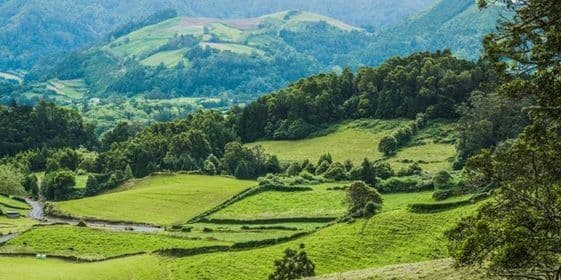
For the last decade, Colombia has been attracting a large amount of foreign investment. If you buy a coffee plantation in Colombia, you will be getting an internationally recognized product.
For the last decade, Colombia has been attracting a large amount of foreign investment. If you buy a coffee plantation in Colombia, you will be getting an internationally recognized product. With strong international demand, high-quality coffee beans, and a new political environment, investment opportunities in the Colombian coffee business have never looked better.
It is possible to buy a coffee plantation in Colombia as a foreigner, but there are some details that have to be taken into account. Understanding the local situation and norms is of paramount importance, which is where we step in. We can help you move into the market with ease and avoid some of the pitfalls that novices may find.
The intricacies of investment in Colombia

The price of land in Colombia varies greatly. The closer to larger cities you are, the more expensive the land is. However, farms which are close to cities tend to have better infrastructure in the area (roads, access to equipment), provide a safer environment (less isolation, hospitals etc.) as well as a higher availability of labor. It is very hard to put a firm price per hectare due to the land usually being sold as a package, usually including a farmhouse, a processing plant and other outbuildings.
Many other factors will complicate prices, such as the condition of the farm, if it is functional or not, if it is virgin land and so on. The key is to define your needs such as altitude and climate before starting your search. It is also important to decide if you want to have your personal single origin coffee or if you want it to be a specialty strain.
Where is best to buy a coffee plantation in Colombia?

Colombia has gained a worldwide reputation as a coffee producer. The most famous provenance is from the coffee triangle, although the central Andes is also popular. Recently GMO strains have gained popularity which makes the coffee plant much more resistant to the sun and disease. Almost all Colombian coffee is arabica, which is a more desirable and thus more expensive variety.
Traditionally, coffee is grown in forested areas which offer shade for the coffee leaves. The tree roots and trunks also retain humidity for longer which encourages high biodiversity (bird droppings are a great natural fertilizer). Arabica is naturally more sun sensitive than robusta, meaning they need shade to protect themselves from the midday heat. Take into account that if you want to use the traditional method, you will need shade bearing trees. The best quality and priced land is often in isolated areas or tend to be overpriced.
It’s not easy to buy a coffee plantation in Colombia. It is strongly recommended that you employ professionals such as estate agents or lawyers who will be able to guarantee the quality and price of the land you are buying.
Property Taxes in Colombia
Property tax is a municipal tax and is imposed depending upon the nature and usage of the property, and generally, the rates range between 0.4% and 1.2%. Interestingly these rates are usually based on the purchasing price of the house.
What are the Risks When Buying Property in Colombia?
The good news is that foreigners can freely buy property in Colombia. Of course, you will need to comply with the Colombian legal system. It is also very important to hire a lawyer in Colombia to go over the titles you are buying in order to make sure that they actually belong to their previous owner. It is important to follow the guidelines below.
- All transfers of title on real estate as well as all encumbrances must be done through the use of a public document.
- All taxes must be paid in order for a transfer to be legally effective. Any document of transfer or judicial decision pertaining to property must be recorded with the authorities.
- The following registration procedures need to be carried out:

- Obtain the property certificate (Certificado de Tradición) from the Registry Office.
- Your lawyer will study the property titles, which takes around 5 days to complete and costs around COP$1,113,000.
- Obtain the following tax certificates: Certificado de paz y salvo predial that states municipal property taxes have been paid, and the Certificado de paz y salvo de valorización which contains taxes related to increases in the value of the property due to constructions, roads, etc.
- Your Notary will then proceed to prepare the public deed. The participation of the notary in the preparation of a public deed is mandatory and their fees tend to be 0.30% of the property value. Moreover, the notary will also keep 1% of the value of the transaction from the seller as an advance payment which will be applied as income tax.
- The Public Deed must be registered at the Registry Office. The Registry Tax (Impuesto de Registro) is paid. After registration, the new public deed is automatically sent to the authorities to register the change of ownership.
Common Sizes of Coffee Plantations in Colombia
Most farms are family owned and don’t surpass 2 hectares; only 5% of farms are bigger than 5 hectares and some of the biggest can be up to 1000 hectares. The larger ones tend to benefit from economies of scale which makes them more competitive. However, from a quality perspective they clearly suffer as well as really struggling to get enough labor in for the pickings.
The ideal farm size is thought to be approximately 5 to 7 hectares. This is small enough for quality to be carefully monitored while being large enough to stay competitive. The minimum investment you should consider when you buy a coffee farm or plantation in Colombia is around 100 million Colombian pesos (USD$29,000 April 2024)
Investment range to buy a coffee plantation in Colombia
The numbers mentioned above refer to agricultural land. It is possible to buy non-functional farms as well as virgin land for less money, yet the setup costs will then need to be taken into account. The cost of transformation from forest to agricultural land isn’t very expensive and bears some advantages such as higher average fertility. Prices tend to range around USD$200 for the deforestation of 1 hectare. The main disadvantage is that the land and farm will be non-yield bearing for three to five years.
The restoration of an old farmhouse can be very time-consuming and expensive, especially if there is a lack of infrastructure in the area. It is therefore recommended you take the state of the buildings, roads and land into account when buying a property.
What are the best ways to buy a coffee plantation in Colombia?
The best way to bring money in is as a loan from a foreign bank. The real benefit of this is security. Since the money is tied to an overseas bank, you can retract it in the case of rapid political change. It is a safe and legal way of action which can be easily done with the help of a team of financial advisors, lawyers and accountants. The alternative is to enter the money as Foreign Direct Investment.
Colombia Promises Large Investment in Infrastructure

Although the government is investing a hefty USD$35 billion into infrastructure (notably highways) it needs to be noted that some existing roads are not fit for purpose. Some isolated areas may not even have any concrete roads at all. When choosing your farm you should make sure road access is sufficient. It might also be worthwhile doing research on where the government is planning to put those roads. This could substantially facilitate trade as well as increase your property price substantially.
Overall it is very important to take your time when choosing to buy a coffee farm or plantation in Colombia. Once you have set a list of criteria which need to be met, ask an estate agent to help with the hunt. When a farm which fits your needs is found, get the property checked by a lawyer and make sure you have ample labor availability.
Biz Latin Hub can support you if you want to buy a coffee plantation in Colombia
If you want to learn more about the specifics of how to buy a coffee plantation in Colombia, the Biz Latin Hub team can help. Our group specializes in the provision of market entry and back office services. Our Bogotá office is set up to deal with exactly this sort of situation.
Our experienced team of lawyers, accountants and market analysts are able to carry out targeted market research. Learn more by contacting us here here. If you want more information from this author about investing in coffee in Colombia, click here.

The information in this article is not intended to be relied upon as the sole basis for any decision which may affect you or your business. Before making any decision or taking any action that might affect your personal finances or business, you should consult a qualified professional advisor. Biz Latin Hub does not warrant that the materials or information contained therein will be error-free or will meet any particular criteria of performance or quality. Biz Latin Hub will not be liable for any special, indirect, incidental, consequential, or punitive damages or any other damages whatsoever, whether in an action of contract, statute, tort (including, without limitation, negligence), or otherwise, relating to the use of these materials or the information contained therein.
Share this guide


Let’s talk about your expansion
Tell us which markets you’re entering and what you need handled. A local specialist will map out your options — no obligation.
Trusted by teams expanding across Latin America and the Caribbean
