Company Formation
Overview of free trade agreements in the Dominican Republic
Published dateMay 18, 2020
Last updateAugust 21, 2023
Reading time6 minutes
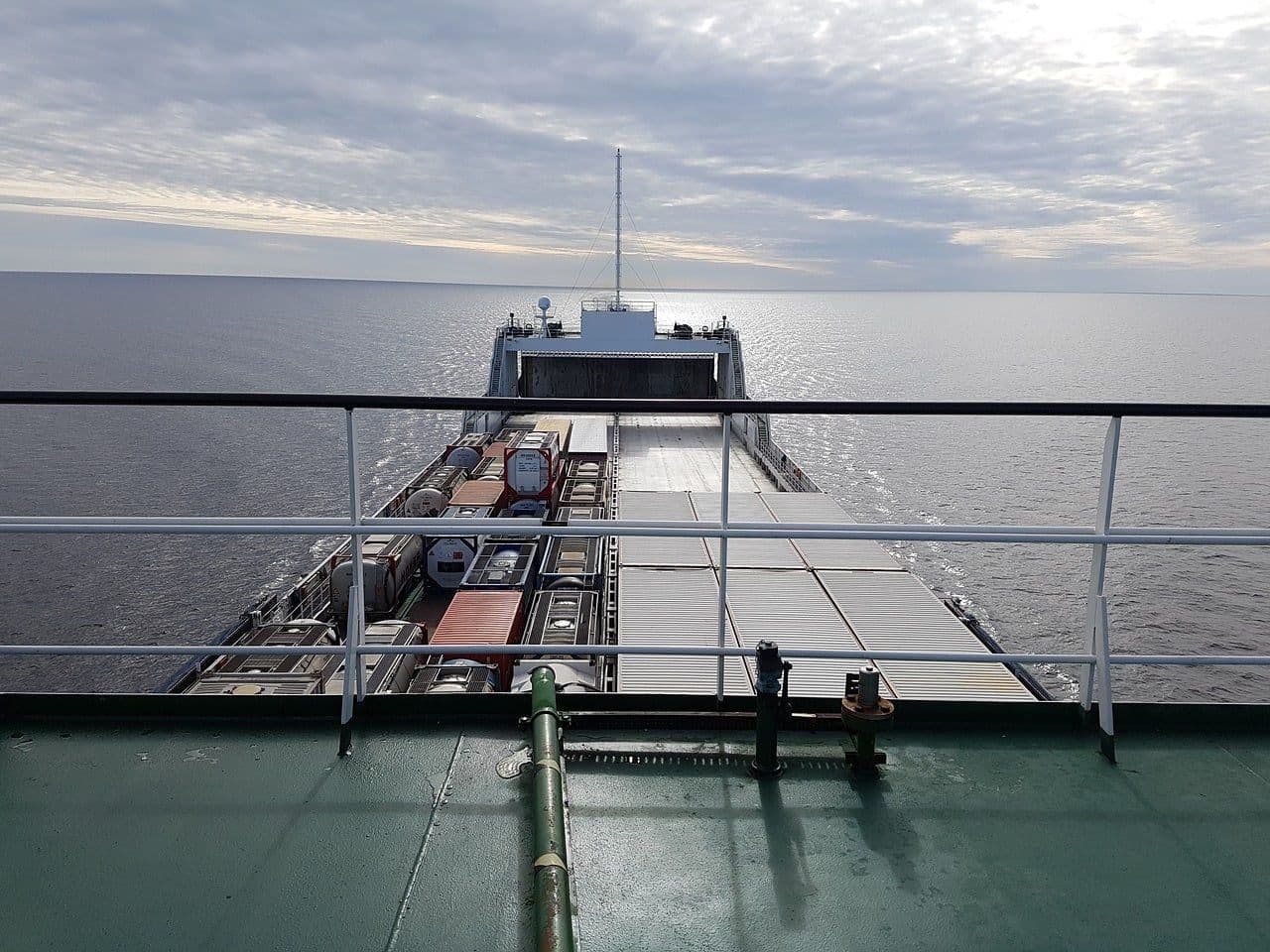
It is hard to overstate the importance of free trade agreements in the Dominican Republic. The country has established more than 50 free trade zones, (Zonas Francas). More than 500 companies are still operating actively in these zones.
It is hard to overstate the importance of free trade agreements in the Dominican Republic. The country has established more than 50 free trade zones, (Zonas Francas). More than 500 companies are still operating actively in these zones. Approximately half of the companies engage in textile and clothing production for the US market. Furthermore, the Dominican Republic produces agricultural products, in particular sugar.
The country was, for a long period, one of the fastest-growing economies in the world. Since 1992, the country has shown economic growth of over 5% per year. After 2001, economic growth has slowed as a result of the recession in the US, high oil prices, and falling prices for its export products. Free trade agreements in the Dominican Republic are a key part of its future plans.

This is due to the USD$11bn of exportations annually, which are key to the nation’s income. Free trade agreements in the Dominican Republic help to grease the wheels of this international trade, benefitting everyone. The country is developing strongly with a solid internal market. The average GDP per capita (PPP) in 2024 is currently USD$27,2310, meaning plenty of clients.
Free trade agreements in the Dominican Republic: an overview
There are a few key free trade agreements in the Dominican Republic, with DR-CAFTA (free trade agreement between the Dominican Republic, Central America, and the United States) and the Economic Partnership Agreement with the EU having the greatest importance.
After that, there is CARICOM, a free trade agreement between the Dominican Republic and the Caribbean Community. The country is also a trading partner of Costa Rica, El Salvador, Guatemala, Honduras, and Nicaragua signed under the DR-CAFTA. The main objectives of this agreement are to strengthen the spirit of cooperation and reciprocal trade between all signatories.
Finally, the preferential trade agreement between the Dominican Republic and the Republic of Panama dates back to July 17, 1985 and has been a boon for both countries.
Dominican Republic-Central and the United States Free Trade Agreement (DR-CAFTA)
DR-CAFTA’s goal is to strengthen the bonds of friendships and cooperation among the member nations and promoting regional economic integration. By creating a broader and more secure market for services and merchandise produces within their territories, while taking into account the differences in the levels of development and the size of the economies.
The free trade agreement is formed between the United States, the Dominican Republic, Costa Rica, the Northern Triangle and Nicaragua. It is without doubt the most important of the free trade agreements in the Dominican Republic.
DR-CAFTA pursues to facilitate access in the areas of services, goods, investments, governmental procurements, and intellectual property. Each party has to eliminate customs duties and will not rise any existing customs duty. In addition, they will not adopt new customs duty on merchandise originating from another signatory nation.
The FTA focuses on investments and the treatment each party gives investors from other members. The agreement establishes that members are obligated to give the same conditions to foreigners as given to their nationals.
Economic Partnership Agreement between the European Union and the CARIFORUM nations (EPA)

The EPA was signed on 15 October 2008 and approved by the Dominican Congress in 2009. It is a mutual agreement, compatible with the World Trade Organization (WTO). The chapters included relating to:
- Innovation and intellectual property
- Investments
- Marketing of services
- Marketing of merchandise
- Adjudication of public contracts and aid to development, among other issues.
The agreement facilitates a free trade zone by eliminating duties, non-tariff measures, quotas and comparable provisions by member countries. It is considered the second most important of the free trade agreements in the Dominican Republic.
The majority of the European Union (EU) composes the EPA. The CARIFORUM countries are: Antigua and Barbuda, the Bahamas, Barbados, Belize Dominica, Dominican Republic, Granada, Guyana, Haiti, Jamaica, St. Kitts and Nieves, St. Lucía, St. Vincent and the Grenadines, Surinam, Trinidad and Tobago.
The objectives of EPA CARIFORM are the creation of a coherent commercial association in order to reduce and eradicate poverty by:
- Encouraging regional integration, economic collaboration, and governance
- Promoting the gradual integrations of the CARIFORUM states into the world economy
- Increasing capacity of the CARIFORUM states in commercial policy and trade issues
- Supporting increased investment and the initiative of the private sector and the competitiveness of the CARIFORUM region
- Improving EU-CARIFORUM relations
EPA includes an asymmetric clause regarding Most Favored Nation treatment which means that if the EU enters into a commercial contract with other non-signatory nations of the EPA, and grants them commercial treatment healthier than those arranged to the EPA countries, this treatment will be automatically extended to the CARIFORUM countries. But, for CARIFORUM nations, this only applies if the deal is reached with a developed nation of some of the emerging nations.
Free trade agreement between the Central American Countries and the Dominican Republic (CAFTA-DR)
The parties signed this Free Trade Agreement on 16 April 1998. Finally, it entered into effect in the Dominican Republic in March 2002. The principal objectives of this agreement are to:
- Promote free trade conditions within the Free Trade Area
- Eliminate barriers to the movement of businesspersons and capital among the territories of the parties
- Promote and protect investments towards intensively benefiting from the advantages offered by the markets of the parties and strengthening the competitive capacity of the signatory countries in the flow of world interchange
- Stimulate expansion and diversify goods and services among parties
- Eliminate trade barriers for goods and services originating in the parties
- Increase the opportunities for investment in the territories of the parties
- Create efficient procedures for the application of and compliance with this treaty, for its joint administration for the solution of controversies
The agreement is formed with the DR and Central America: Costa Rica, El Salvador, Guatemala, Honduras, and Nicaragua. This makes it another of the important free trade agreements in the Dominican Republic.
Commercial Treaty between the Dominican Republic and the Republic of Panama (Partial AAP Scope)

This is the oldest of the free trade agreements in the Dominican Republic. It was signed on 17 July 1985 and ratified by the Dominican Congress in 1987. However, it did not go into effect until 2 November 2003.
Products that benefit from this agreement must originate within the parties backed by a Certificate of Origin. Originating merchandise is that which is produced in the territory of one or both parties:
- based on non-originating materials which may have undergone a substantial transformation expressed via a change of customs classification value of regional content or other requisites.
- even though one or more of the non-originating materials utilized in the production of the merchandise does not comply with a change of customs classification.
- Is obtained in full or produced entirely from materials that qualify as originating.
Due to this treaty, 103 Dominican products enter duty-free into Panama. Correspondingly, the Dominican Republic allows duty-free entry of 101 Panamanian products. Additionally, there is a list which shows products manufactured in the Free Zones or Exportation Processing Zone. The application regulation foresees the possibility of including more products to benefit from free trade.
Expanding to the Dominican Republic? Engage with a local legal expert
Free trade agreements in the Dominican Republic offer exciting opportunities for executives looking to do business in the Caribbean and Central America. While foreign investors haven’t discovered the country yet, the perfect time is now to establish yourself in a growing market.
Biz Latin Hub has legal and accounting experts across Central and South America, and the South Pacific. Our services specialize in foreign company incorporation and market entry strategies. Contact our team of experts to discuss your opportunity in the Dominican Republic.
Learn more about our team and expert authors.

Share this guide
More guides for Dominican Republic

Company FormationDominican Business Culture: Trust, Formality, and Social Connections
Employment2025 Hiring Guide for Businesses in the Dominican Republic – Recruitment, EOR & Entity Setup Services
Tax & AccountingAuditor in the Dominican Republic: Why do you need one?

Company FormationNearshoring in the Dominican Republic: What are the benefits?
Let’s talk about your expansion
Tell us which markets you’re entering and what you need handled. A local specialist will map out your options — no obligation.
Trusted by teams expanding across Latin America and the Caribbean
