Compliance and Security
UBO in Mexico: how to stay compliant
Published dateJune 17, 2024
Last updateSeptember 4, 2024
Reading time6 minutes
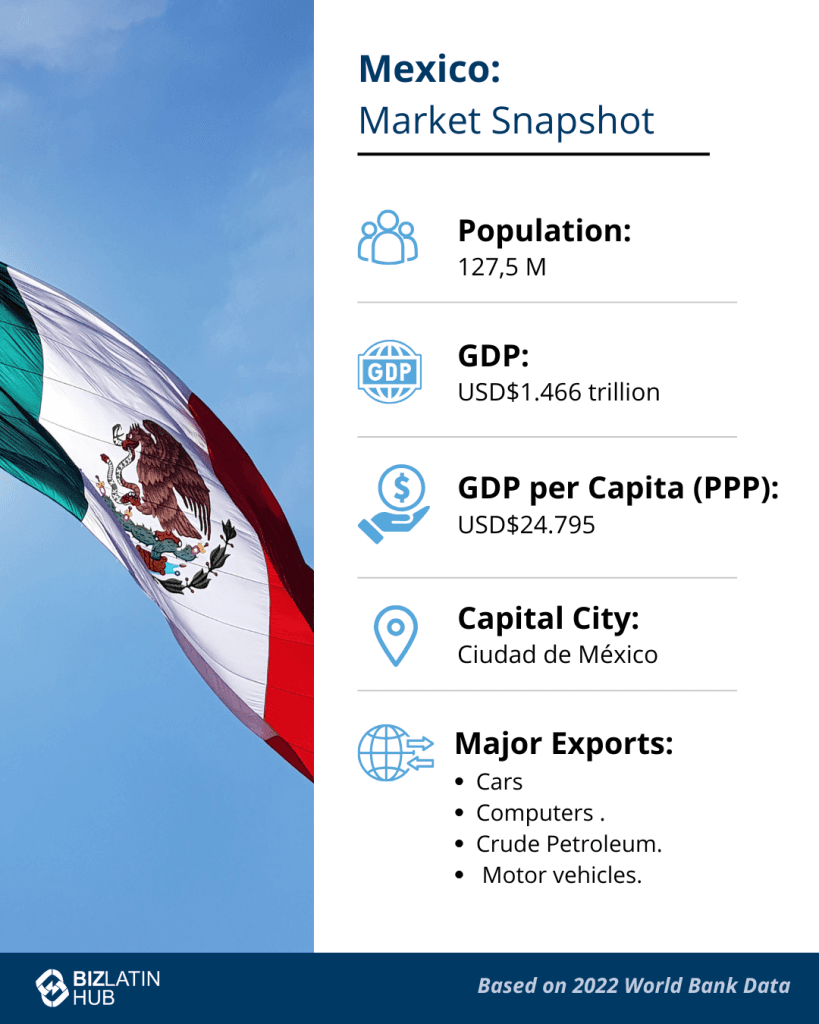
Mexico is an exciting and dynamic economy that has been attracting more and more Foreign Direct Investment (FDI) in recent years. However, a few problems persist in the country, especially persistent corruption.

Mexico is an exciting and dynamic economy that has been attracting more and more Foreign Direct Investment (FDI) in recent years. However, a few problems persist in the country, especially persistent corruption. To combat this, the government has brought in legislation to check the Ultimate Beneficiary Owner status, known as UBO in Mexico.
As a relatively new law, many companies remain unaware of their commitments to identifying a UBO in Mexico. The country is taking this seriously, in part to provide confidence to foreign investors. If you’re considering company formation in Mexico, you will need to take these regulations into account.
That means it makes sense to partner with a local specialist such as Biz Latin Hub. We have a local office that can handle compliance with the regulations for UBO in Mexico City, as well as another 17 across Latin America and the Caribbean.
What is UBO in Mexico?
The regulations on identifying UBO in Mexico came into effect on the first of January 2022. This was an amendment to the federal tax code which requires all legal entities, whether legal (companies) or natural (individuals), to maintain records of their ultimate beneficiary owners.
Article 32-B of the new federal tax code defines who is liable to be counted as the ultimate beneficiary owner. The controlling beneficiary (UBO) is the individual or group of individuals who:
- A: Directly or using any legal act, obtains the benefit derived from its participation in a legal entity, a trust or any other legal figure, as well as from any other legal act, or is the one who ultimately exercises the rights of use, enjoyment, enjoyment, use or disposition of a good or service or on whose behalf a transaction is carried out, even if it is done or they do it in a contingent manner; or,
- B: Directly, indirectly or contingently, exercise control of the legal entity, trust or any other legal entity.
The term control is defined as being able to make decisions in meetings of shareholders; the ability to appoint or dismiss members of the board; having more than 15% of the voting shares; and managing the company in effect.
While some of these definitions are clear, others are a little harder to identify. If in doubt, contact a local lawyer to make sure that you are receiving the best possible advice for your situation. As the definitions are broad, there is room for some interpretation of the law.
Why is it important?
The laws were brought in to help fight against endemic corruption issues and the influence of organized crime. Globally, there is a strong trend towards greater transparency in international business dealings. This is especially important for international businesses that may also be doing business in other territories.
Money laundering is often disguised by routing cash flows through complex bureaucratic systems, for example. Another area of interest for the government is confirming that anyone who has been barred from company ownership is not exercising control over a business.
As a member of the Financial Action Task Force (FATF), Mexico has certain standards to uphold and identifying who may be a UBO in Mexico is a central plank of that strategy. As the country has a lot of trade with the United States, companies will particularly want to avoid triggering the Patriot Act. However, this is also true of the UK Bribery Act, FCPA and others.

By following well-established international norms, Mexico offers a sense of investor confidence for foreign firms or individuals who may want to operate in the country. With everything being kept transparent and above board, your Mexican interests will not endanger other parts of your global operation.
How can you stay compliant?
You must present full fiscal information to SAT, the local tax agency. Failure to do this means a fine of up to MXN$2,000,000 (approx. USD$110,000) per person identified as a UBO in Mexico and not correctly declared as so.

This is best done with a competent and well-regarded local lawyer, specifically someone with solid and fully up-to-date information on the most recent implementation of the law. As the definition is relatively broad, there may be interpretation issues to deal with.
This is especially true of companies that operate in a range of territories, particularly if they have multiple tax responsibilities. Large companies with complex bureaucracy across regions may find it difficult to identify a UBO in Mexico.
You will need to make sure that you keep up to date records for anyone that could be considered a UBO in Mexico. This includes, but may not be limited to the following:
- Copy of ID and personal information
- Country of tax residency
- RFC (local tax identification number)
- Involvement with and relationship to the entity and/or any other entities in Mexico
It is not necessary to give this information to the SAT as part of regular accounting, but it may be asked for at any point of your business life cycle. It must be provided upon request by the tax authorities.
FAQs on UBO in Mexico
These are the questions we most often field from our clients on issues connected to UBO in Mexico.
1. Can a foreigner own a business in Mexico?
Yes, 100% ownership is permitted under Mexican law.
2. What documents are necessary for a UBO in Mexico?
You will need to make sure that you keep up-to-date records for anyone who could be considered a UBO in Mexico. This includes, but may not be limited to the following:
- Copy of ID and personal information
- country of tax residency
- RFC (local tax identification number)
- Involvement with and relationship to the entity and/or any other entities in Mexico.
3. Who may be considered a UBO in Mexico?
The controlling beneficiary (UBO) is the individual or group of individuals who:
- A: Directly or by means of any legal act, obtains the benefit derived from its participation in a legal entity, a trust or any other legal figure, as well as from any other legal act, or is the one who ultimately exercises the rights of use, enjoyment, enjoyment, use or disposition of a good or service or on whose behalf a transaction is carried out, even if it is done or they do it in a contingent manner.
- B: Directly, indirectly or contingently, exercise control of the legal entity, trust or any other legal entity.
4. Why does Mexico monitor UBOs?
To avoid international non-compliance with issues such as money laundering, to fulfil its obligations under FATF and to provide investor confidence.
5. What is the penalty for not declaring a UBO in Mexico?
There is a fine of up to MXN$2,000,000 (approx. USD$110,000) for non-compliance
Biz Latin Hub can keep you compliant with UBO in Mexico
Identifying UBO in Mexico can be complex and requires due diligence to ensure the success of market entrants. Biz Latin Hub can ensure your company is fully compliant with local regulations and can operate with minimal delay.
We offer a range of market entry and back-office services to support your commercial success in Mexico. The Biz Latin Hub team is built of well-experienced, bilingual, and knowledgeable accountants and lawyers striving to offer premium service.
Our team of local and expatriate professionals offers responsive, tailored legal and accounting solutions in Mexico where procedures tend to be lengthy and complex. If you want to set up a company, then Biz Latin Hub can be your professional partner.
Reach out to our team of local experts for advice and comprehensive market services.
Learn more about our team and expert authors.

Share this guide
Let’s talk about your expansion
Tell us which markets you’re entering and what you need handled. A local specialist will map out your options — no obligation.
Trusted by teams expanding across Latin America and the Caribbean
