Compliance and Security
Overview of intellectual property regulations in Latin America
Published dateJune 9, 2019
Last updateNovember 20, 2024
Reading time8 minutes
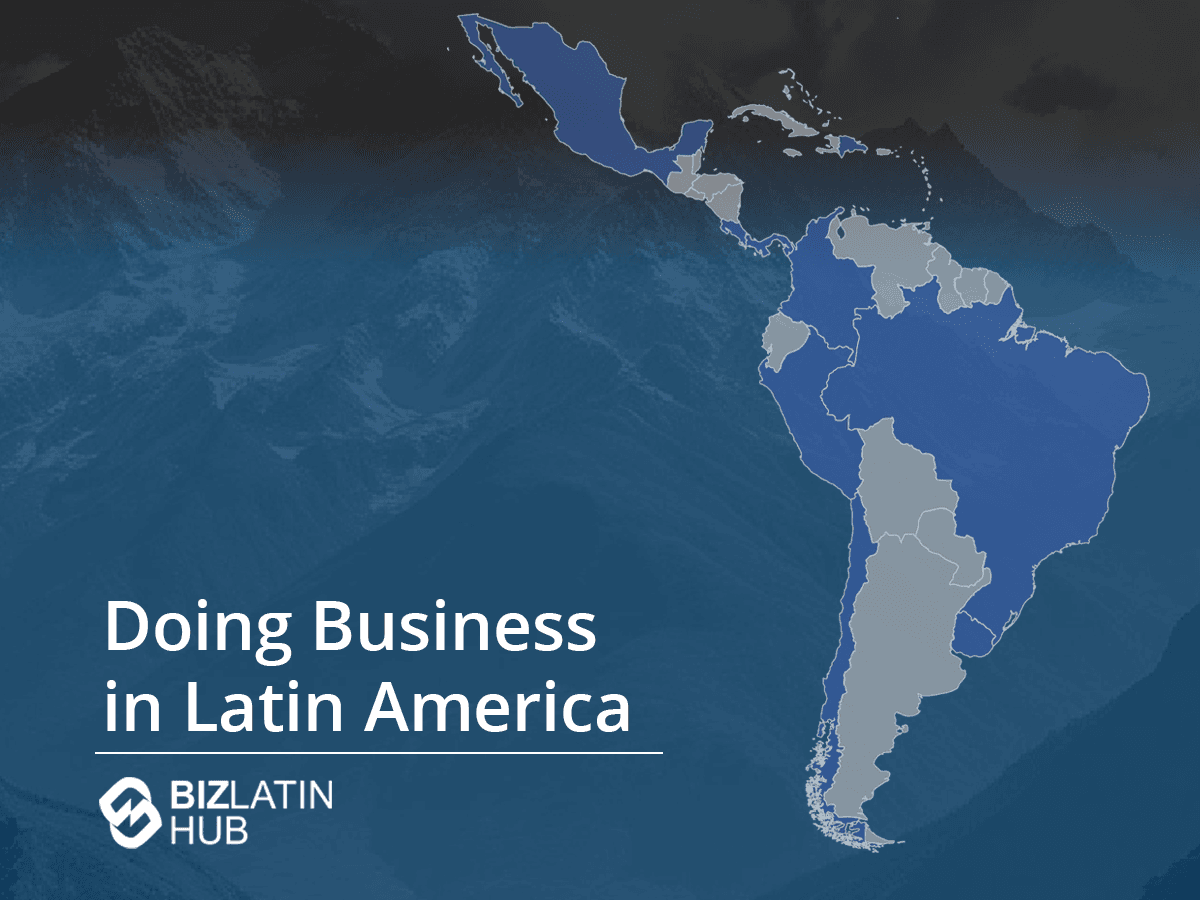
A wide range of industries are looking to see how they can strengthen and protect their sector’s intellectual property. IP can represent a large proportion of a company’s value, and so it’s essential to keep abreast of the current laws and intellectual property regulations in Lat…
A wide range of industries are looking to see how they can strengthen and protect their sector’s intellectual property. IP can represent a large proportion of a company’s value, and so it’s essential to keep abreast of the current laws and intellectual property regulations in Latin America, a region that is continuing to expand and develop.
Intellectual property can be a barrier to entry for firms considering company formation in Latin America. Intellectual property regulations in Latin America are necessary for investors to feel confident in putting their money into knowledge-intensive industries. Without a guarantee that inventions will be protected against competitors, foreign investors may be put off.
We take a look at current intellectual property regulations in Latin America and identify some of the countries with the most progressive IP laws. Wherever you choose to invest in, Biz Latin Hub can help you via one of our 18 dedicated local offices across Latin America and the Caribbean. Our array of back office services will keep you fully compliant and protected under local laws.
What is intellectual property (IP)?

The World Intellectual Property Organisation (WIPO) defines intellectual property as “creations of the mind: inventions; literary and artistic works; and symbols, names and images used in commerce.” It is a form of property rights that protects an author’s work from being copied or duplicated by competitors.
Intellectual property is made up of two different categories:
- Industrial property: patents, trademarks, industrial designs
- Copyright: literary works, films, art, music and architectural design
Advanced intellectual property laws are necessary for a country to promote innovation and competition. It drives economic development and creates employment in advanced knowledge industries. Therefore, without a structured regulation system, firms will not invest in new technologies due to the lack of legal protection. Likewise, pharmaceutical companies, which form a leading sector in patent registrations, will not be incentivised to introduce new medicines into markets.
What are the intellectual property regulations in Latin America?
Latin America historically has had less developed intellectual property regulations compared to the United States and European countries. However, in recent decades the region has taken steps to improve its position on intellectual property. It is a key consideration for firms deciding whether to invest in a country or region as to how strong their products and/or services will be legally protected.
Other important factors are the rule of law, political stability and government restrictions on investments or capital flows. A WIPO study known as the GII ranks countries internationally on their commitment to protection of IP. The leaders in intellectual property regulations in Latin America are Brazil, Chile and Mexico, with the former ranking at position 49 and the other two in the fifties.
Four hispanophone countries with a good rating are Mexico, Colombia, Chile, and Peru. These four countries also form part of the Pacific Alliance, which launched a Patent Prosecution Highways (PPH) agreements in 2016. Patents reviewed and approved in member countries are eligible for expedited review within the Pacific Alliance. This helps firms expand quickly between member countries, ensuring their work is protected.
Mexico
Due to its extensive trade agreements, the country has had to keep up with modern intellectual property requirements. The Mexican Institute of Industrial Property (IMPI) processes intellectual property. A progressive reform that entered into force in 2018 introduced non-traditional forms of trademarks that were eligible for legal protection. These included sound marks, scents and holographics.
Furthermore, the country can enforce adherence to intellectual property rights through administrative, civil and criminal actions. Commercialising intellectual property rights is also facilitated, particularly within public-private partnerships. Mexico became a member of the Madrid Protocol in 2013 – one of three Latin American countries, along with Colombia and Cuba.
As a member of the CPTPP, it is a requirement that countries are either party to the Singapore Treaty or the Madrid Protocol. Currently, Mexico is the only Latin American member country of the CPTPP that fulfils this requirement. Although efforts have been made, Mexico still lacks coverage in online piracy; however, the ability to prosecute against such activities has improved.
Colombia
Colombia has taken big steps to improve its market for intellectual property. In 2017, it received 8.6% of total Latin American foreign direct investment, totalling US$13.9 billion. Such investment requires sufficient protection for foreign and domestic firms.
The country’s trademark and patent office, Superintendencia de Industria y Comercio (SIC), passed various resolutions to simplify the intellectual property process and increase its legal coverage. In 2018, the Copyright Act of 1982 was updated to extend copyright rights from 50 to 70 years.
Enforcement frameworks cover both civil and criminal avenues in the event of an infringement. Colombia is a member of the Madrid Protocol which subsequently improved the protection of trademarks in the country. The protocol also simplifies the process, as a single IP application can cover all member countries. The country currently lacks sufficient coverage for life sciences and mechanisms to remove copyright or trademarked activities online.
Chile

Chile continues to show promising commitment to intellectual property rights. This has been driven by its openness to trade and resulting trade agreements. Its national agency for intellectual property is the National Industrial Property Institute (INAPI) which coordinates with other government agencies. The creation of the institution along with Chile’s numerous trade agreements has helped demonstrate the importance of intellectual property rights for trade and economic growth.
Chile’s economy is largely dependent on mining, which is responsible for many patent applications. However, many universities are now filing patent applications, diversifying the economy into new knowledge sectors. The Chilean government has increased its efforts to educate the public about intellectual property and costs of piracy and counterfeit products. However, the country still has a way to go with effective enforcement mechanisms as there are considerable levels of counterfeit and piracy.
Peruvian laws
Peru has massively improved its position on intellectual property within the last few years. The development of the National Institute for the Defense of Competition and Protection of Intellectual Property (INDECOPI) has aligned enforcement between different government sectors. Enforcement against trademark infringement can be filed with INDECOPI. Compensation for damages can be processed through the civil court.
In January 2016, a Patent Prosecution Highway (PPH) was entered with Spain, meaning patents approved in either country will be reviewed quicker in the other partner country. This mechanism helps firms from Spain expand quicker into Peru, with the assurance of protection. The government is also invested in increasing protection for technology transfer, relevant for Peruvian universities and inventors.
INDECOPI is known to be efficient in the timely processing of applications compared to other Latin countries trade offices. Given Peru is a member of the CPTPP, they will need to become a party to either the Singapore Treaty or the Madrid Protocol, as per the regulations of the trade agreement.
A legislation change could further motivate firms to enter the market with improved property rights the agreements provide. It is important for firms to conduct due diligence in Peru as part of any merger, acquisition, or other type of expansion into the country.

FAQs on intellectual property regulations in Latin America
Biz Latin Hub can assist you with intellectual property regulations in Latin America
Now that you’re more aware of the intellectual property regulations in Latin America, it’s time to think about how you can best grow your company abroad.
Biz Latin Hub has expert teams that can assist your business expansion into Latin America. We offer corpoate accounting & taxation, hiring & PEO, and due diligence, among others, while our legal services experts have the IP knowhow to guarantee your products and services are protected.
Contact us today to find out more.

Share this guide



Let’s talk about your expansion
Tell us which markets you’re entering and what you need handled. A local specialist will map out your options — no obligation.
Trusted by teams expanding across Latin America and the Caribbean
