Tax & Accounting
How Does the Peruvian Fiscal System Function for Mining Companies?
Published dateFebruary 14, 2019
Last updateDecember 1, 2023
Reading time5 minutes
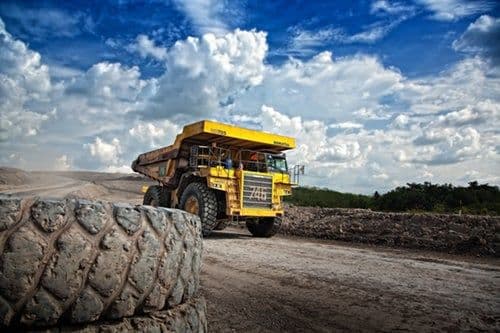
FocusEconomics experts forecast that investor confidence in Peruvian will remain high for some time as the new government confirms the country´s openness to foreign participation in the local economy.
FocusEconomics experts forecast that investor confidence in Peruvian will remain high for some time as the new government confirms the country´s openness to foreign participation in the local economy. The country’s GDP is expected to expand 3.8% in 2019, and 3.7% in 2020, further supporting investor confidence in the region.
Because of this increase in investor confidence, investment in the region is expected to grow dramatically this year. In fact, there are significant mining projects that have begun in several regions across the nation. As not an only a Latin America mining leader, but a global mining power, smart foreign investors are very aware of the investment opportunities available in the Peruvian mining sector.
For companies involved in the Peruvian mining sector, it is vital to have a comprehensive understanding of the fiscal system and how it affects their mining operations. Peru’s progressive fiscal system tends to create flexible conditions for mining companies, while also the collecting an adequate share of taxes for the greater society.
Peruvian Fiscal System – Mining taxes

Corporate Income Tax
Peruvian corporations are subject to corporate income tax on their global taxable income. This refers to all companies established in Peru. The corporate income tax also applied to mining companies and comes in at 29.5%. In addition, there is a dividend tax at a rate of 5% imposed on the distributions of profits for both branches of foreign companies and resident companies.
All mining companies in Peru must prepare and file an annual tax return. This tax declaration must be presented between March and April each year to avoid problems with the national tax authority – Superintendencia Nacional de Aduanas y de Administración Tributaria (SUNAT).
In addition to the corporate income tax and dividend tax, there are taxes imposed specifically on companies involved in the mining sector. Below, the Modified Mining Royalty (MMR), Special Mining Tax (SMT) and Special Mining Burden (SMB) will be briefly explained:
Modified Mining Royalty (MMR)
In 2004, the Peruvian government introduced a new tax that obligates mining companies to contribute a 1%-12% tax (paid on a quarterly basis) on the value of commercial sales of metallic and non-metallic mineral resources. This is called the modified mining royalty (MMR).
Special Mining Tax (SMT)
The Special Mining Tax (SMT) is a tax applied to mining income. The marginal rate, depending on the margins, ranges from 2%-8.4%. The SMT is taxed only on the operating profit derived from the sale of metallic mineral resources.
Special Mining Burden (SMB)
Contrary to the obligated taxes stated above which are enforced by the Peruvian authorities, there is a voluntary tax, called the Special Mining Burden (SMB). Larger mining companies with high-profit margins are requested to help with the construction hospitals, new roads, schools or water supplies in order to support local communities – this support is covered in the SMB.
Indirect Taxes
Additional indirect taxes should be considered in addition to the specific mining taxes. When there is a sale of goods in Peru, a Value Added Tax (VAT) of 18% is applied. It should be noted that exporters can be reimbursed for any VAT paid on the acquisition of goods and services.
Taxation Exemption
Investments with a certain threshold value, undertaking large mining operations, may enter tax law stability agreements with the government. The general threshold amount applied by the regime is a minimum of USD$10 million. In general, these agreements are valid for between ten to fifteen years.
Custom Duties
Tax Bases
The applicable customs duties typically range from 6%-11%, however, many goods and services are free from taxes at an HS 6-digit level. For instance, capital goods are generally free from customs duties.
Regional Trade Agreements (RTA)
The establishment of Regional Trade Agreements provide Peruvian mining companies with appealing fiscal advantages. See below a list regional trade agreements that Peru is a part of:
- Andean Community (CAN): Peru, Bolivia, Colombia & Ecuador.
- Latin American Integration Association (ALADI): Peru, Argentina, Brazil, Chile, Cuba, Paraguay and Uruguay.
- Southern Common Market (Mercosur): Peru, Brazil, Argentina, Paraguay, and Uruguay.
- Additional Trade agreements: With the EU, the US, Canada, Japan, China, and the UK.
International Tax Treaties
In addition to Free Trade Agreements with prominent partners, Peru is a member of a multilateral tax treaty with the Andean Community countries (Ecuador, Colombia, and Bolivia). This tax treaty ensures that taxation should take place at the source, and puts legislation in place to avoid double taxation. Peru has similar treaties through the creation of bilateral agreements between other nations such as Switzerland, Portugal, Mexico, South Korea, Brazil, and Chile.
The purpose of the international tax treaties is to avoid double taxation, which will encourage international business to expand globally without worry about being taxed twice.
What Benefits are Offered to Foreign Mining Companies?

Foreign investors can obtain investment guarantees through legal stability agreements (mentioned above). Specific to foreign investors, the following guarantees are granted to foreign mining companies:
- Stable income tax regime.
- Free remittance of profits, dividends capital, and other income.
- Favorable exchange rates in the marketplace.
- Equal treatment between foreign and domestic investors.
Is your Company in Need of Mining Support?
Peru will continue to see strong economic growth this year, encouraging foreign participation in the local markets. The mining sector remains a strong national sector, and foreign mining expertise, technology, equipment, and services have great potential in the marketplace.
While the sector offers a wealth of commercial opportunities, the mining fiscal system can be challenging to navigate without the right local support. Therefore, it is advisable to work with a local partner to enable your operations in the region. Biz Latin Hub has ample experience in the Peruvian mining sector and can help contribute to your business success in Peru. If you have any queries, do not hesitate to contact us now.
Share this guide



Let’s talk about your expansion
Tell us which markets you’re entering and what you need handled. A local specialist will map out your options — no obligation.
Trusted by teams expanding across Latin America and the Caribbean
