A Guide to Legal Entity Types in Antigua and Barbuda
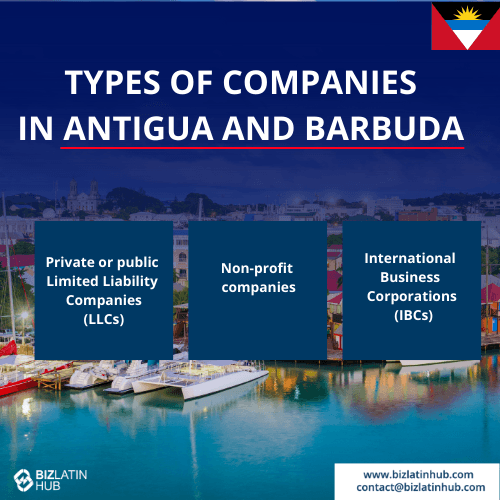
Choosing the right legal structure for your business determines how your enterprise will operate, be taxed, and its exposure to liability. For company formation in Antigua and Barbuda, understanding the available options is essential for making an informed decision.
Choosing the right legal structure for your business determines how your enterprise will operate, be taxed, and its exposure to liability. For company formation in Antigua and Barbuda, understanding the available options is essential for making an informed decision. According to the Companies Act of Antigua and Barbuda, businesses can be registered under several structures, including Private Companies, Public Companies, International Business Corporations (IBCs), and others. Each structure has its own requirements and implications for business operations. This guide details the features of the two primary corporate structures—the Domestic Company and the International Business Company (IBC)—to help you select the right entity.
Key Takeaways: Company Types in Antigua and Barbuda
What are the two main types of companies in Antigua and Barbuda? — Domestic Companies and IBCs.
What are the requirements for forming a Domestic Company? — It must have a registered office in Antigua and Barbuda and is subject to local taxes. Its formation requires filing articles of incorporation, bylaws, and other notices with the IPCO.
Can you run a company 100% virtually? — A company must have a registered office in Antigua and Barbuda.
Which entity type is best for foreign investors seeking tax efficiency? — The IBC is the standard for international business.
Main Company Types for Incorporation
According to the Companies Act of Antigua and Barbuda, businesses can be registered under following structures:
1. The Domestic Company
This entity is formed under the Companies Act 1995. It is intended for businesses operating within the local economy. It must have a registered office in Antigua and Barbuda and is subject to local taxes. Its formation requires filing articles of incorporation, bylaws, and other notices with the IPCO.
2. The International Business Company (IBC)
This entity is formed under the International Business Corporations Act. It is designed for international activities and is legally barred from engaging in local commerce. IBCs provide significant tax advantages and are the preferred vehicle for foreign investors not targeting the local market. Formation must be handled by a licensed registered agent.
Expert Tip: Choosing a Licensed Registered Agent for an IBC
Based on our experience, the most critical step in forming an IBC is selecting a licensed registered agent. The International Business Corporations Act mandates that all IBCs must be incorporated and managed through a licensed agent in Antigua and Barbuda.
This agent is not just a mailing address; they are responsible for all filings and for ensuring the IBC complies with the law. We advise clients to verify that their chosen service provider holds a valid license from the Financial Services Regulatory Commission (FSRC) before engaging them. Using an unlicensed provider can render the incorporation invalid.
Formation Requirements
For standard companies, incorporation requires:
- Articles of incorporation with prescribed information
- At least two citizens of Antigua and Barbuda as incorporators, one of whom must be a qualified legal practitioner, or
- A body corporate authorized by the Cabinet of Antigua and Barbuda
Benefits of Selecting the Right Legal Structure

Selecting the correct legal structure can provide crucial benefits in Antigua and Barbuda. Foreign investors gain tax advantages and confidentiality by choosing these structures. The legal framework they select affects registration costs, including fees for registered office services and compliance expenses.
Different legal frameworks, such as the Companies Act and the Limited Liability Companies Act, guide these business forms. They shape the specific advantages each structure offers, whether in terms of liability protection or operational flexibility.
The company registration process in Antigua and Barbuda is managed through an efficient legal environment. This setup helps entrepreneurs looking to establish a business. The supportive regulatory landscape encourages businesses to pick structures that match their operational and financial goals.
Understanding the Registration Process
The Antigua and Barbuda company registration process is managed by the Office of the Intellectual Property & Commerce Office (IPCO). Entrepreneurs need to submit a registration form along with essential documents, such as the Memorandum and Articles of Association and proof of name reservation. Payment of registration fees is required.
List of Key Requirements:
- Submit registration form and required documentation
- Pay registration fees to IPCO
- Ensure all documents meet legal standards
Once approved, the company gains official incorporation status, ready to begin operations in Antigua and Barbuda.
Taxation Implications
The Antigua and Barbuda Corporate Tax System maintains specific tax regulations for different business structures. Companies must register for a Tax Identification Number (TIN) and comply with tax obligations. International Business Corporations (IBCs) may be eligible for special tax considerations under the International Business Corporation Act.
Ongoing Corporate Obligations and Compliance
Companies in Antigua & Barbuda must maintain a registered office, which acts as their legal address. This office is essential for receiving official correspondence and legal documents.
An annual return detailing the company’s structure and status must be filed with authorities to ensure legal compliance. These returns, along with annual financial statements, are crucial. Companies must prepare and submit these statements, which reflect financial performance and status, to regulatory bodies.
Compliance with local tax obligations is required. This includes paying corporate income tax and payroll taxes by specific deadlines. Keeping accurate financial records at the registered office is mandatory. These records should show the company’s financial position and include consolidated financial statements of any subsidiaries.
Obligation — Requirement
Registered Office — Legal address for correspondence
Annual Return — Detail structure and status
Financial Statements — Reflect performance and status
Tax Compliance — Income and payroll taxes adherence
Financial Records — Accurate reflection of financials
Adhering to these obligations safeguards corporate legitimacy and ensures smooth business operations.
Governing Body: The Intellectual Property and Commerce Office
The Intellectual Property and Commerce Office (IPCO) is the government body in Antigua and Barbuda responsible for the registration of all companies. Formation documents for both Domestic Companies and IBCs are filed with this office, which maintains the official registry.
Key Differences: Domestic Company vs. IBC

An International Business Corporation (IBC) in Antigua is designed for international business activities. This model offers entrepreneurs tax advantages and confidentiality as it is a tax-neutral entity.
The formation of an IBC can be accomplished swiftly, even within 24 hours. This process includes preparing the Articles of Incorporation and securing government registration.
Notably, IBCs simplify compliance, as there is no requirement to file annual financial reports, conduct statutory audits, or submit annual returns to state tax authorities.
However, an IBC must maintain a legal address in Antigua and appoint a registered agent. This agent is responsible for communicating with the government and ensuring legal compliance.
An IBC can engage in varied investment activities such as asset protection, international trading, and leasing of global assets.
Advantages of IBC Registration
Registering an IBC in Antigua and Barbuda offers a 100% tax exemption, making it an attractive financial option for business owners. The IBC structure allows registration with just a single shareholder and one director, who can be the same person. This ease of setup and management appeals to many entrepreneurs. Additionally, foreigners have the opportunity to fully own corporate shares in an IBC, enabling international investors to establish a local presence. Confidentiality is a key feature, as banking details and shareholder information remain undisclosed to third parties. Furthermore, Antigua and Barbuda’s stable economy and modern offshore financial sector create a supportive environment for IBC operations.
IBC Management
Antigua requires IBCs to have a nexus to the jurisdiction. While you can have foreign directors, the IBC must have a local Registered Office and Agent. Furthermore, strict record-keeping requirements mean that even if accounting records are kept abroad, the local agent must know where they are and be able to access them.
Tax Reductions and Incentives
Antigua and Barbuda offer a corporate tax rate of 25%, yet businesses benefit from the absence of a Value Added Tax (VAT), creating a favorable tax landscape. Tax incentives in the country are tailored to encourage investment and cover special provisions such as research and development tax credits. These credits boost innovation and technology investment. Foreign companies may also enjoy tax holidays or reduced tax rates due to government initiatives to attract foreign direct investment. Additionally, personal income, capital gains, net wealth, and inheritance taxes are nonexistent, further enhancing individual and business appeal. Companies that do not hold tax residency in Antigua are not subject to taxes, thereby incentivizing business activities outside the jurisdiction.
Tax Incentives — Description
Corporate Tax Rate — Set at 25% with no VAT imposed
Personal & Asset Taxation — No personal income, capital gains, net wealth, or inheritance
Foreign Investor Benefits — Tax holidays and reduced rates for attracting investments
By providing these benefits and incentives, Antigua and Barbuda create an inviting landscape for domestic and international business operations.
Expert Tip: Banking Access
From our experience, forming an Antigua IBC is fast, but opening a bank account for it is the bottleneck. Antigua has a strong banking sector, but they conduct rigorous due diligence on IBCs. We advise clients to ensure their business plan is detailed and their “Source of Wealth” documentation is prepared before incorporating the IBC, to ensure the entity doesn’t sit dormant waiting for a bank account.
Evaluating the Economic Landscape of Antigua and Barbuda
The economy of Antigua and Barbuda is predominantly driven by tourism, contributing over 50% of the nation’s GDP. Financial services also play a crucial role, establishing the country as a leading offshore center since 1982. The government’s focus on tax transparency has positioned Antigua and Barbuda as a key jurisdiction for international tax compliance, recognized by the OECD.
Key Incentives for Economic Growth:
- Exemption on dividends.
- Duty exemptions for select business sectors.
- Tax incentives for foreign investment and local entrepreneurs.
Antigua and Barbuda’s strategic location and solid legal framework make it an attractive destination for business incorporation. These factors, combined with attractive tax incentives, bolster its economic appeal to international investors. The nation’s commitment to providing a favorable business environment supports diverse economic activities and nurtures the local agricultural sector.
Economic Sector — Contribution
Tourism — Over 50% of GDP
Financial Services — Significant
Agricultural Sector — Supported by incentives
Understanding the economic landscape and regulatory framework is essential for foreign investors. The country’s policies encourage a variety of business operations, including International Business Companies and limited liability companies, further diversifying Antigua and Barbuda’s economic activities.

Investment Concessions and Support Programs
Antigua and Barbuda offer various investment incentives to support and attract businesses. The Antigua and Barbuda corporate tax rate of 25% enables companies to retain more profits, bolstering investment opportunities. Additionally, businesses might benefit from duty exemptions on specific imports, reducing their operating costs.
The Antigua and Barbuda Investment Authority grants investment concessions in line with the Amended Investment Authority Act 2019. These concessions aim to improve the investment climate for both local and international investors. Furthermore, companies can repatriate profits freely, providing foreign investors unrestricted access to returns.
For small businesses, the Small Business Development Act 2007 offers significant help. The Act provides technical assistance and credit guarantees to foster growth.
Investment Incentives:
- Corporate Tax Rate: 25%
- Duty Exemptions: Specific goods and equipment
- *Profit Repatriation: Unrestricted
Support for Small Businesses:
- Technical Assistance
- Credit Guarantees
These programs and incentives create a favorable environment for business growth and investment in Antigua and Barbuda.
The Role of the Antigua and Barbuda Hospitality Training Institute
The Antigua and Barbuda Hospitality Training Institute (ABHTI) plays a critical role in developing skilled professionals for the tourism and hospitality sectors. This educational institution is characterized by its comprehensive training programs designed to meet industry standards. ABHTI offers certificates and diplomas in various hospitality fields, equipping students with practical and theoretical knowledge.
ABHTI’s curriculum includes key areas such as front office operations, culinary arts, and tourism management. Each program is contingent upon industry needs and includes hands-on training. For instance, students in culinary arts benefit from practical sessions in fully equipped kitchens.
In collaboration with local hotels and restaurants, ABHTI ensures that its graduates are ready for immediate employment. This partnership also offers students opportunities for internships, which are essential for gaining real-world experience.
Key Programs at ABHTI:
- Front Office Operations
- Culinary Arts
- Tourism Management
- Event Planning
The role of ABHTI is essential for enhancing the skills of the local workforce, supporting the growth of Antigua & Barbuda’s tourism industry, and attracting international investors. Through its programs, the institute contributes to the economic activities of the nation by providing trained professionals who meet global hospitality standards.
Making a Well-Informed Decision
Making a well-informed decision when setting up a company in Antigua and Barbuda requires understanding the various types of company structures. This country operates under a legal system based on English Common Law, which may be familiar to foreign investors. An advantage here is the allowance for 100% foreign ownership, which can greatly benefit international investors.
Key management elements such as a minimum requirement of one share, one shareholder, and one director streamline the incorporation process. The Antigua International Business Corporation Act of 1982 regulates International Business Companies (IBCs), setting clear guidelines for formation, taxation, and structuring. This act is crucial for business owners seeking clarity on their tax obligations and legal entity structuring.
Incorporation Essentials:
- One share
- One shareholder
- One director
Understanding these options and regulations will aid in selecting the most suitable business structure, aligning with economic sector or specific business activities. Being well-versed in these aspects is essential to leverage the opportunities available within Antigua and Barbuda, particularly for those in the financial services or agricultural sectors.
Frequently Asked Questions: Antigua and Barbuda Entities
Setting up a business in Antigua and Barbuda involves choosing the right legal entity. Each business structure offers distinct features that cater to different needs and circumstances. Understanding these can help in making an informed decision.
What is a Domestic Company used for?
A Domestic Company is formed under the Companies Act and is designed to conduct business within Antigua and Barbuda. It is subject to all local laws and taxes, including the 25% corporate income tax.
What are the main advantages of an IBC?
An IBC offers complete exemption from local taxes (income tax, capital gains, withholding tax), a high degree of confidentiality for its owners, and operational flexibility for international business.
Can an IBC do business in Antigua and Barbuda?
No. An IBC is strictly prohibited from conducting any business with persons resident in Antigua and Barbuda. Its activities must be exclusively international.
What is the minimum number of shareholders and directors?
For both a Domestic Company and an IBC, a minimum of one shareholder and one director is required. They can be the same person and can be of any nationality.
What is the minimum capital for an IBC?
There is no minimum paid-up capital, although authorized capital is typically set at USD $50,000 to minimize government fees.
Professional Support Services
Biz Latin Hub Can Help You optimize your business structure for tax advantages in Antigua and Barbuda
Antigua and Barbuda is an appealing destination if you are looking to expand your business operations or establish a new enterprise. However, before you can fully set up, you must complete the company registration process.
Biz Latin Hub provides tailored business services to meet your needs, including company formation, legal services, accounting and taxation support, and assistance with visa processing. Contact us today to discover how we can support you in registering your new company in Antigua and Barbuda.

